Local preview only

Story-led field guide panels.

The artwork should catch the eye. The text below it should do the teaching. This keeps first-time users from having to read tiny poster labels while still giving experienced users the practical reason each clue matters.

Story lead-in

See the clue, then read the field lesson.

Each panel now works as a simple lesson card: image, title, plain read, beginner read, then the pro field note.

How to judge this page

We are testing the story rhythm, not publishing yet.

If this feels right, the live guide can use the same pattern: smaller image, optional zoom, short beginner read, then the pro/PFA action. No user should need to decode tiny poster text.

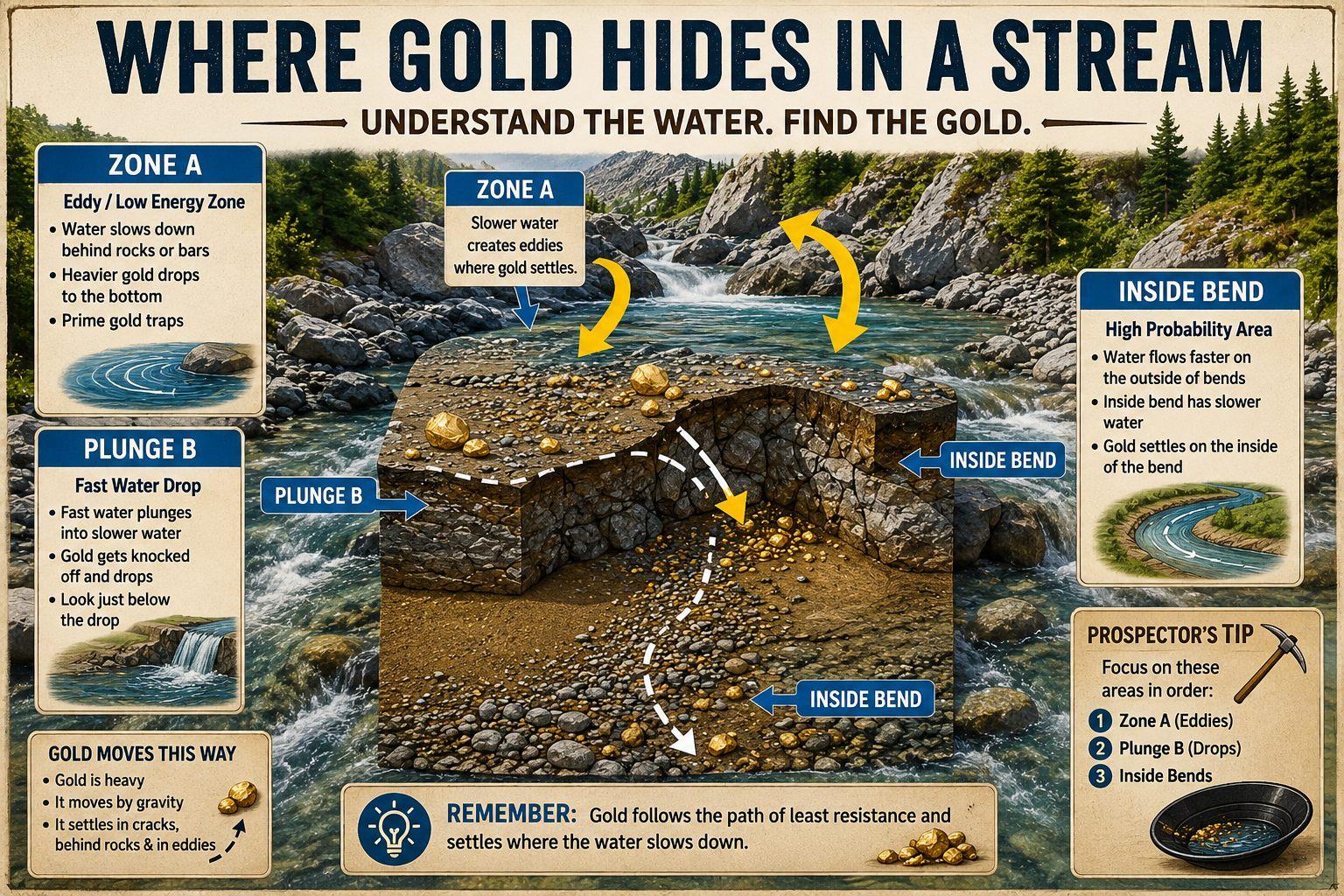
Generated artwork showing stream traps and heavy material concentration.

Tap image to open

Open + zoom

Water and heavies

Follow the water, then test the trap.

Plain read

  • Gold and other heavy material tends to settle where water loses force, such as inside bends, plunge pools, bars, cracks, and bedrock traps.
  • PFA should turn that into a field question: where did the energy slow, and what layer or note can confirm it?

Beginner: Start where water slows, turns, or drops energy. Inside bends, bars, bedrock ribs, and low-pressure edges are easier first reads than random rough ground.

Pro: Use the image as the story cue, then confirm with LiDAR, drainage, slope, soil markers, and your own saved finds.
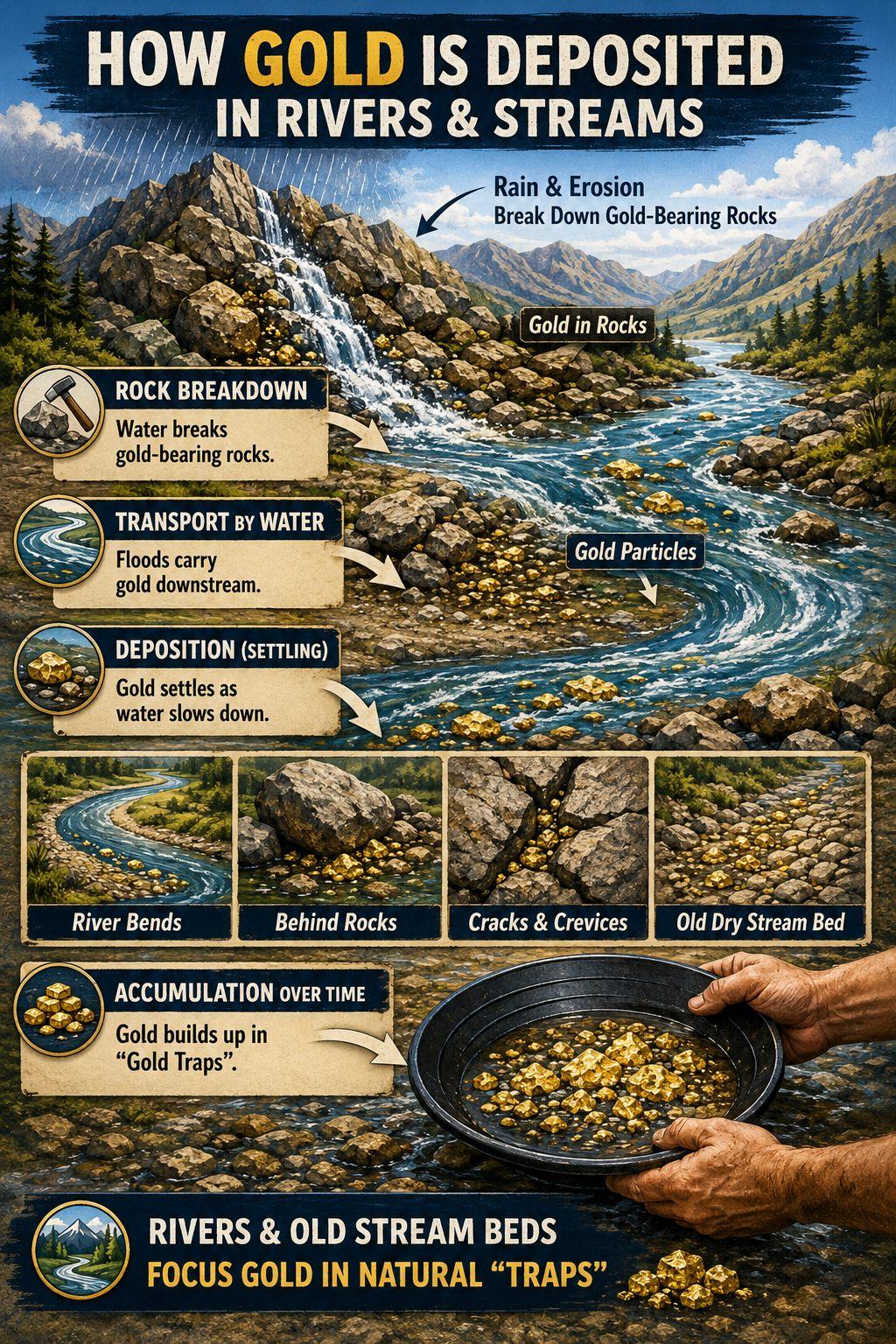
Generated artwork showing a winding creek and placer trap concept.

Tap image to open

Open + zoom

Buried ground

Old channels can hide in plain sight.

Plain read

  • Old channels can be hidden under later soil, clay, gravel, or vegetation, so the best clue may be terrain shape rather than a shiny surface sign.
  • PFA should explain this as a slow-check area: compare LiDAR, drainage, slope, and any geochemistry before calling it a target.

Beginner: A flat surface does not always mean empty ground. Covered wash, old drainage, and palaeo-channel edges can still be worth checking.

Pro: Stage terrain, geology, and any sample layers together so buried-channel ideas stay as evidence, not guesswork.

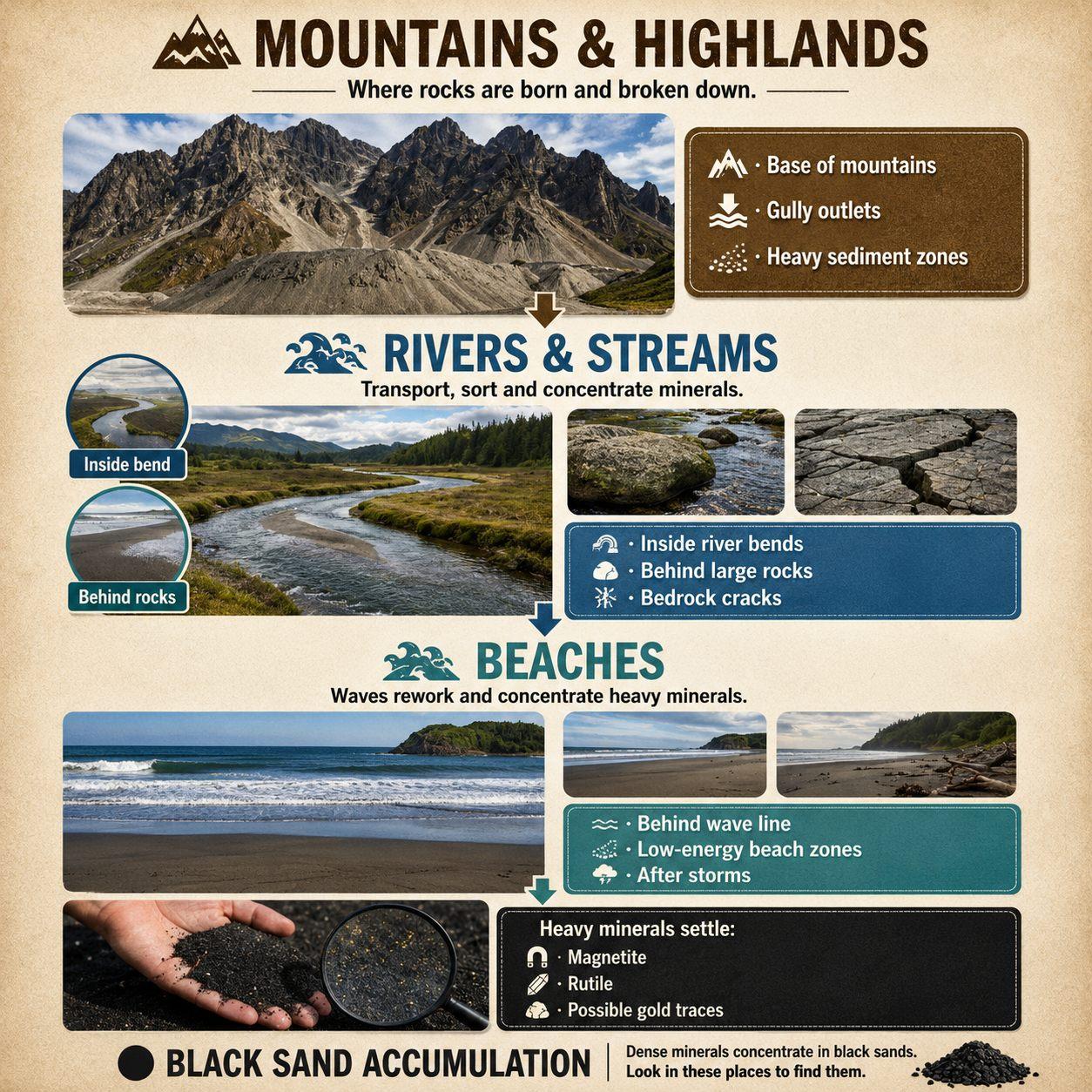
Generated artwork showing mountains, rivers, beaches, and heavy material pathways.

Tap image to open

Open + zoom

Waterline reads

Creeks and beaches move the clue line.

Plain read

  • The useful line is not always the current water edge. Flood marks, old beach cuts, creek bends, and storm drops can move the clue.
  • PFA should keep those observations with the session so the next trip starts from what the ground already taught you.

Beginner: Where moving water slows or changes direction, heavier material can settle into a line, pocket, bar, or low-energy corner.

Pro: Record the waterline, flood line, creek bend, or beach cut with the session, because water changes the clue before memory does.

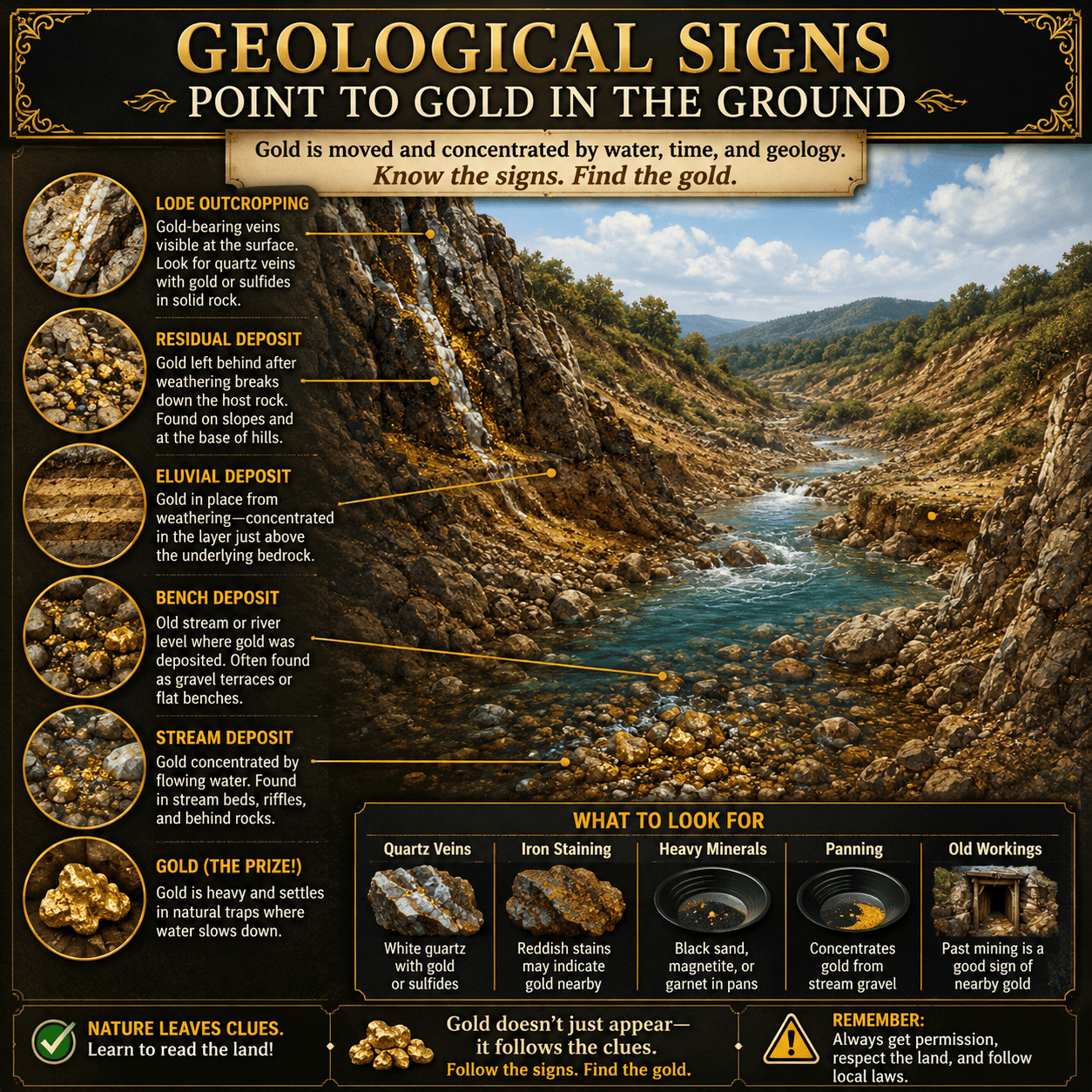
Generated artwork showing a rocky valley and geological signs.

Tap image to open

Open + zoom

Geology clues

Geological signs need ground truth.

Plain read

  • The poster is pointing at lode outcrops, residual material, eluvial slopes, bench deposits, stream deposits, quartz, iron staining, and old workings.
  • PFA should translate that into honest field language: these are clues worth checking, not promises, and they still need permission and ground truth.

Beginner: A good-looking rock, gully, or ridge is still only a clue. Treat it as a reason to slow down, not as proof of a find.

Pro: Pair rock notes with detector behaviour, geology, faults, mineral occurrence context, and sample markers before turning a clue into a plan.

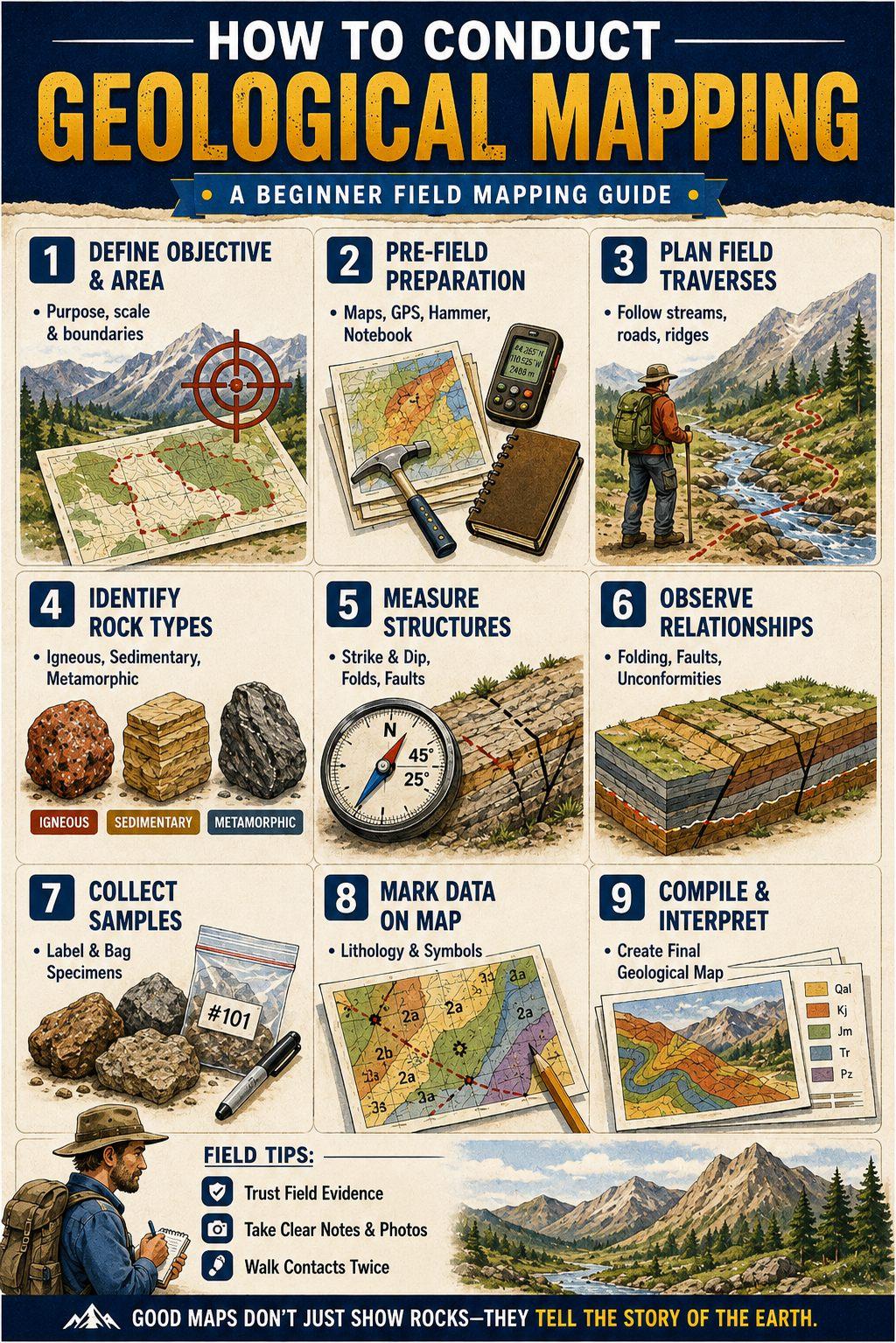
Generated artwork showing field geology and mapping concepts.

Tap image to open

Open + zoom

Mapping habit

Turn field notes into the next run.

Plain read

  • The point is not to make the user study a complicated map. It is to save the few field facts that matter before they are forgotten.
  • PFA should make notes, pins, layers, and follow-up areas feel like one field habit instead of separate jobs.

Beginner: A good map is a memory aid. Save what you saw, what you tried, and what the ground did before the day blurs together.

Pro: Use PFA to keep setup, access, terrain layers, target notes, and follow-up areas in one repeatable workflow.

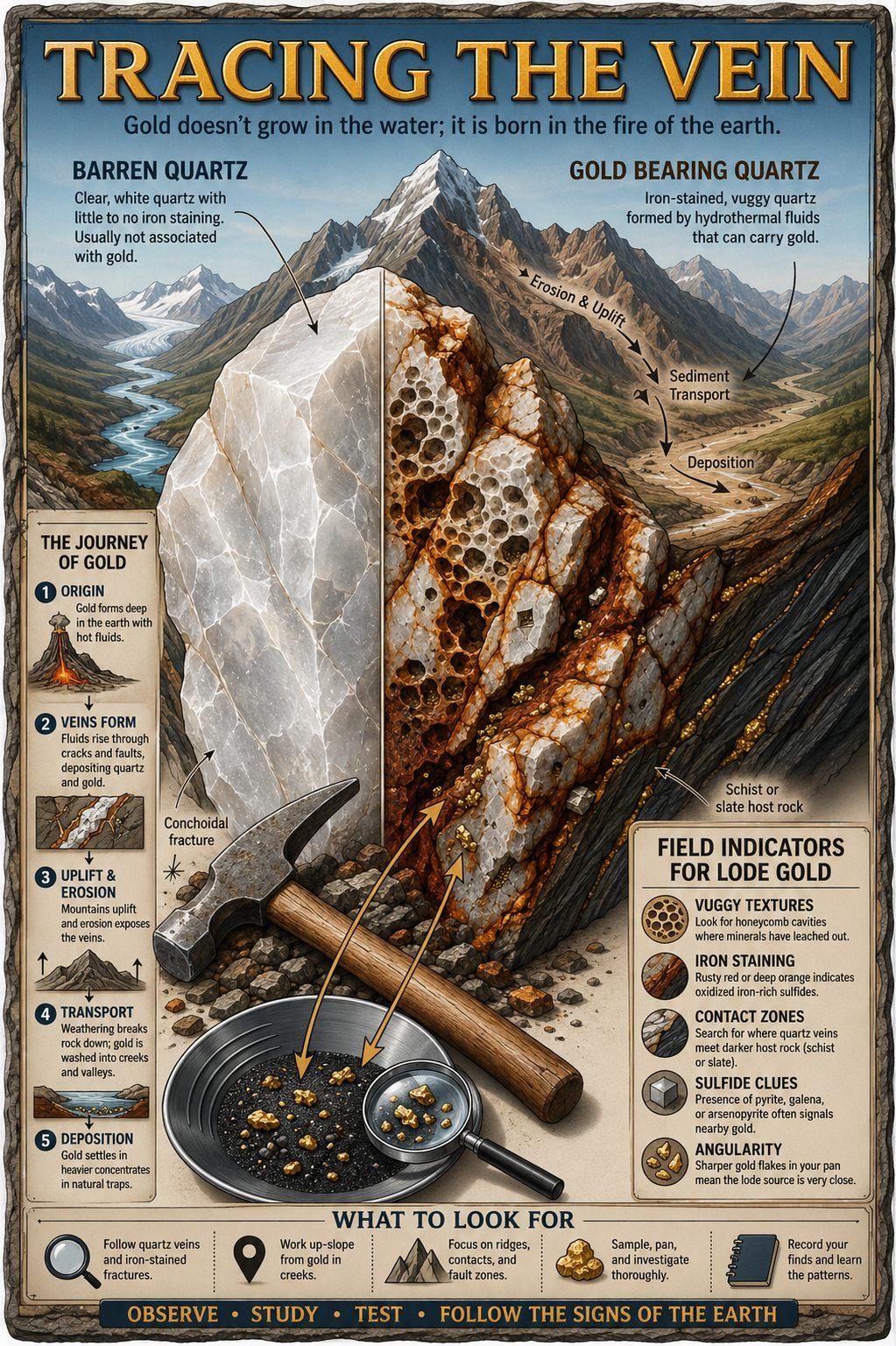
Generated artwork showing a vein-tracing concept for geology and structure.

Tap image to open

Open + zoom

Structure

Faults and veins are a plan, not a promise.

Plain read

  • The image is telling a structure story: fluids move through cracks, veins form, erosion exposes clues, and material can move downhill into traps.
  • PFA should keep this as a planning layer, then ask the user to confirm with terrain, access, samples, and detector behaviour.

Beginner: Faults, contacts, ridges, and old workings are not magic answers. They are places to slow down and read more carefully.

Pro: Keep fault lines, tenure, sample markers, LiDAR, and pins separated so the useful pattern does not become map noise.

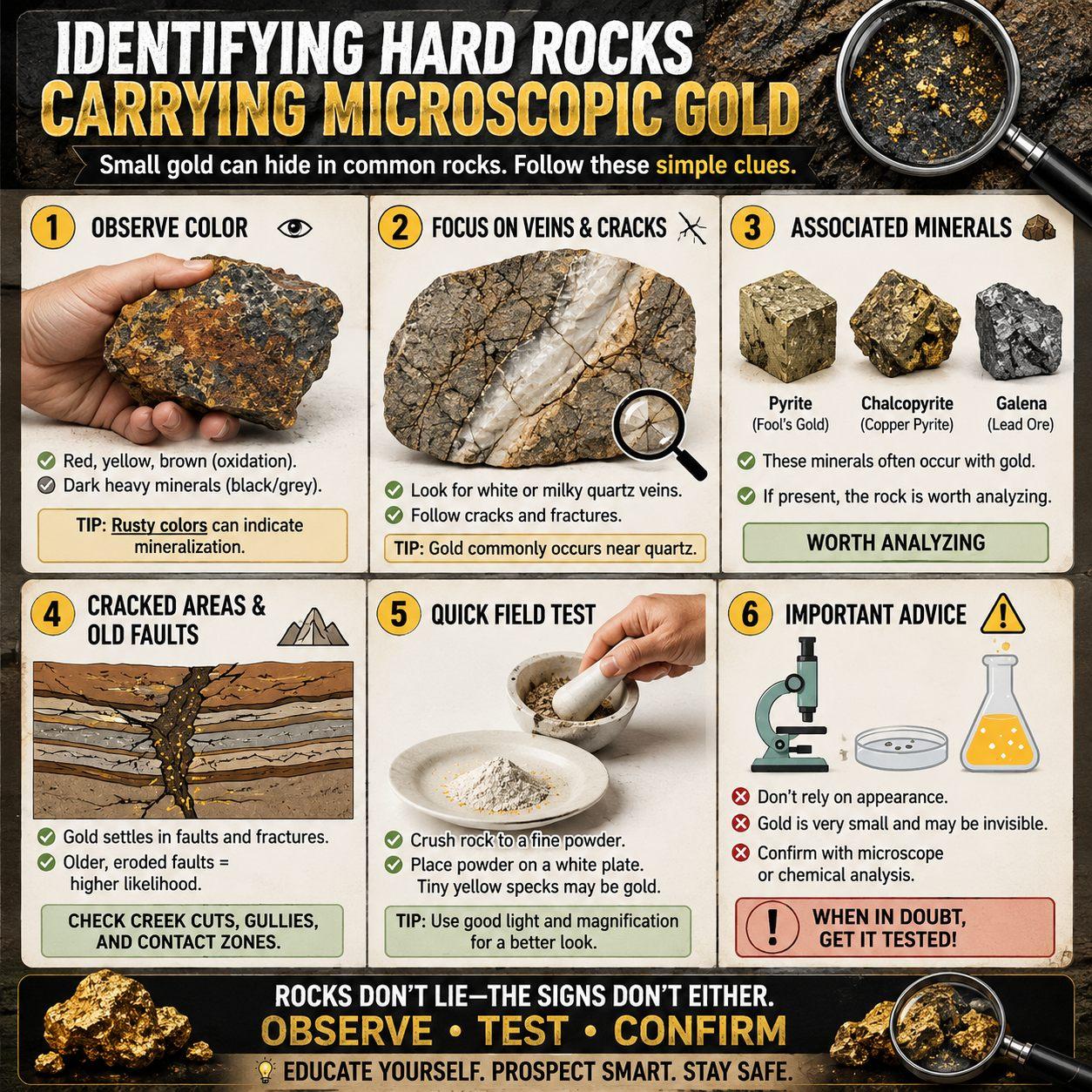
Generated artwork showing hard-rock mineral clues and field testing.

Tap image to open

Open + zoom

Hard rock clues

Rust, quartz, and sulphides still need proof.

Plain read

  • The poster is about slowing down around hard-rock clues instead of assuming every rusty or quartz-rich rock means gold.
  • PFA should turn the clue into a field check: record the rock, compare it with geology and structure, and only then decide whether it deserves follow-up.

Beginner: Rusty colour, quartz, black minerals, and sulphide-looking rock can be useful clues, but appearance alone is not enough.

Pro: Treat colour, veining, fractures, contact zones, and associated minerals as a pattern that still needs testing, notes, and context.

Generated artwork about common field mistakes and caution checks.

Tap image to open

Open + zoom

Field caution

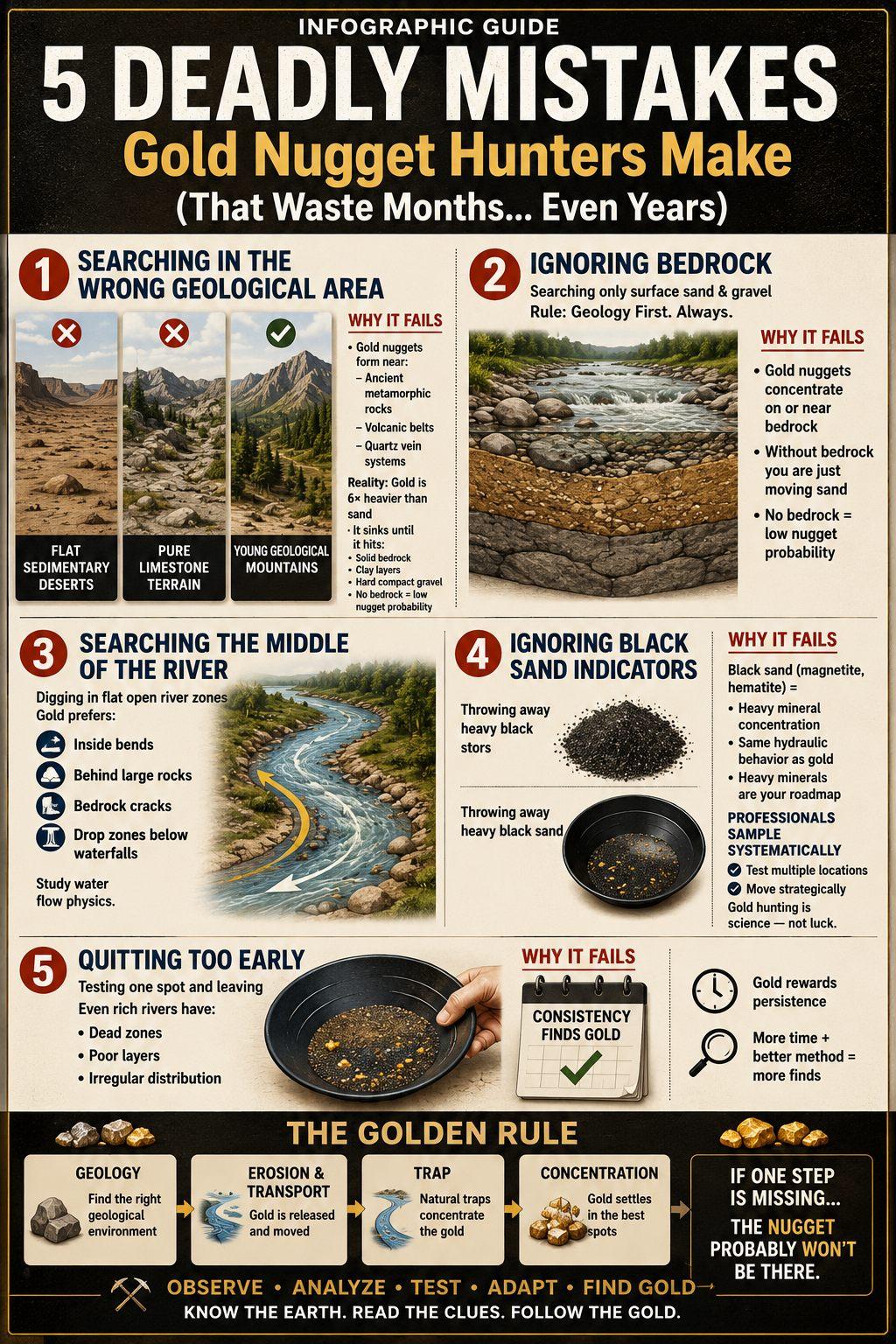
Avoid the mistakes that waste the day.

Plain read

  • The caution panel is about avoidable mistakes: wrong setup, no access check, no notes, poor follow-up, and chasing noise too early.
  • PFA should help beginners slow down just enough, while still letting experienced users move quickly through the checks they already understand.

Beginner: Rushing setup, ignoring access, chasing noise, or forgetting notes can cost more than a quiet patch ever will.

Pro: Let PFA keep the boring checks close enough that experienced users can move fast without skipping the guardrails.