
Terrain
Start with shape, not clutter.
Grey LiDAR, field terrain, relief, slope, roughness, aspect, TPI, and TRI can show ridges, gullies, flats, and drainage before overlays crowd the read.
Gold prospecting workflow
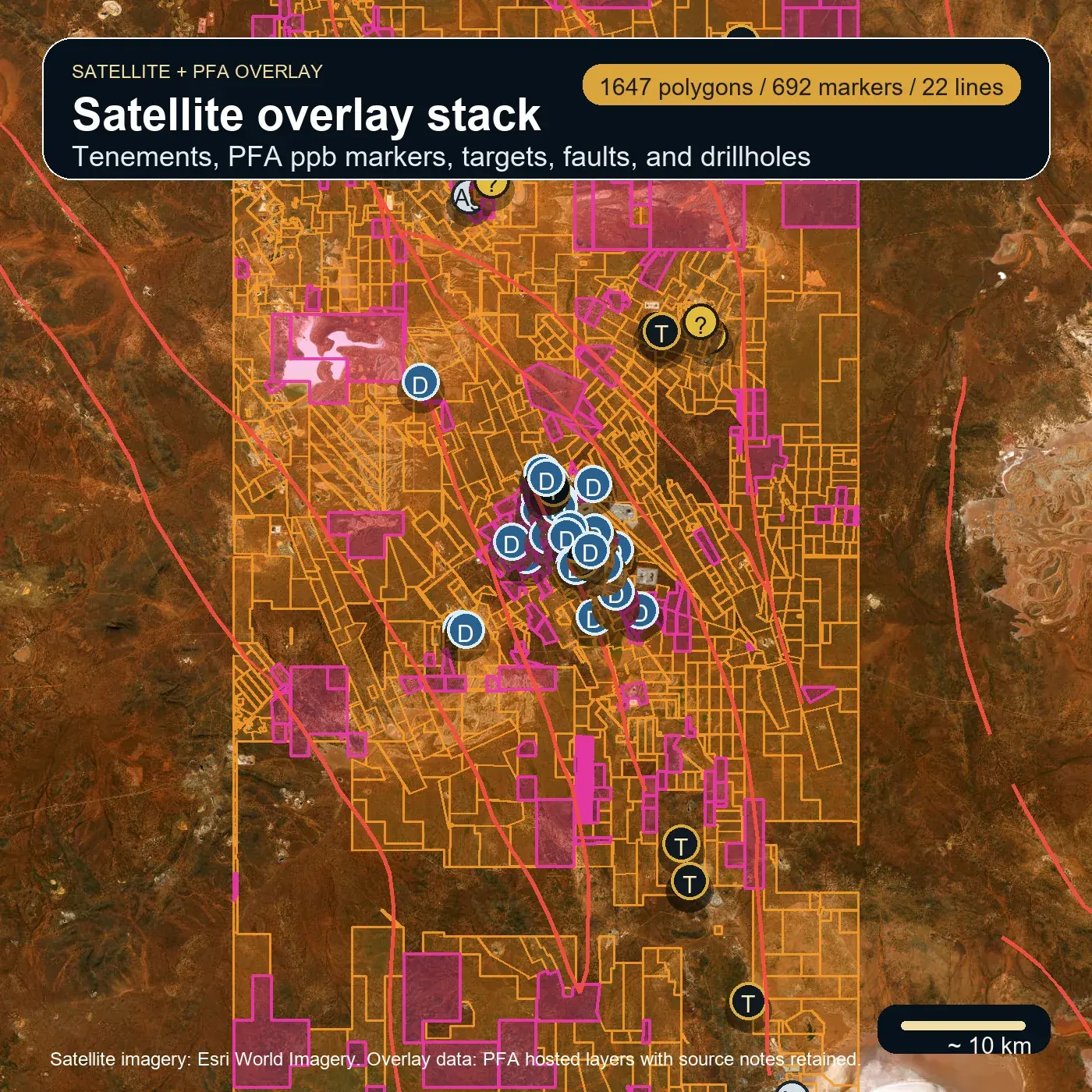
Goldfield work needs more than a marker on a map. PFA brings terrain, LiDAR, tenure context, soil markers, fault lines, drill context, detector setup, saved finds, and follow-up notes into one practical field workflow.
Product promise
PFA should help a detectorist make a better field decision, not pretend the map alone can do the hunting.
What people search when the day goes wrong
Terrain
Grey LiDAR, field terrain, relief, slope, roughness, aspect, TPI, and TRI can show ridges, gullies, flats, and drainage before overlays crowd the read.
Evidence
Tenure, soil ppb markers, faults, drillholes, historic workings, and targets become more useful when each layer has a clear job.
Field memory
A good prospecting day should carry forward the detector setup, ground behaviour, notes, target response, and follow-up plan.
Field workflow
Stage only the terrain and overlays needed for the current goldfield, state, or pilot area.
Tenure and restriction layers help guide caution, but users still need permission and official checks before field action.
Soil markers, fault lines, drillholes, geology, and terrain help form a stronger idea than any one clue alone.
Settings, signal behaviour, hot rocks, finds, and notes complete the loop so the next run starts with better evidence.
Why PFA is different
The stronger product story is detector-aware field intelligence: better setup, cleaner context, saved evidence, and smarter follow-up.
PFA keeps country-specific layers and rules separate so a WA tenement workflow does not leak into an NZ fossicking or UK heritage context.
Beginners get plain next steps; experienced users get terrain styles, source-aware overlays, saved packs, and detailed review.
Field memory first