
Before the hunt
Set up from the detector in your hand.
Choose the detector, coil, ground type, and goal before the map takes over. The setup path keeps beginners steady and lets pros move faster.
Metal detecting field app
PFA is built for detectorists who want to stop rebuilding the day from memory. Save the machine, coil, ground read, map context, finds, notes, and follow-up clues so the next hunt starts smarter.
Product promise
Most detector apps focus on maps or finds alone. PFA focuses on the decision loop: ground, setup, signal, save, and improve.
What people search when the day goes wrong
Before the hunt
Choose the detector, coil, ground type, and goal before the map takes over. The setup path keeps beginners steady and lets pros move faster.
During the hunt
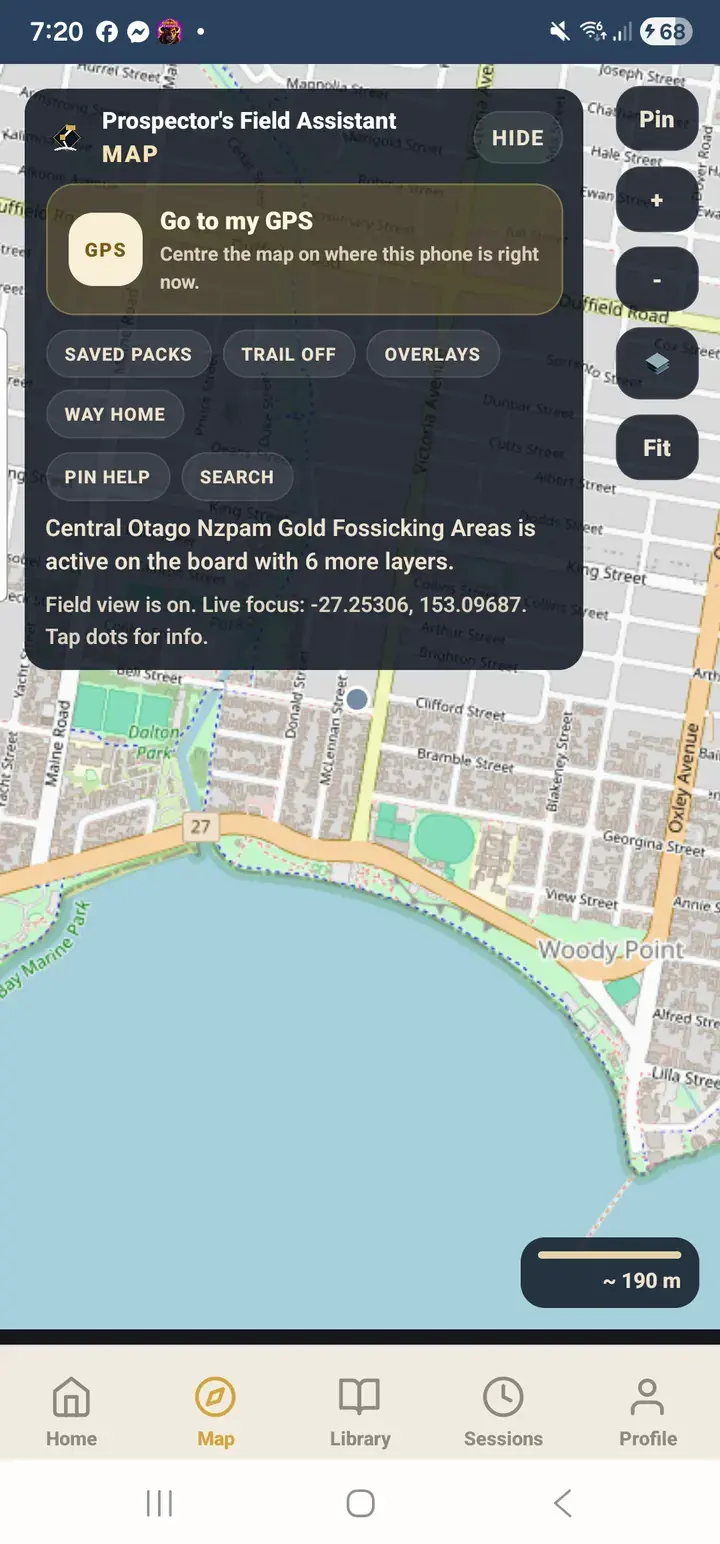
GPS centre, saved packs, overlays, way home, search, tracker, and pins stay available from the field map instead of being buried in settings.
After the hunt
Save the settings, ground notes, finds, and map context that mattered so the next trip starts from evidence rather than a vague memory.
Field workflow
Australia, New Zealand, and UK lanes can use different wording, layers, and legal cautions without mixing the user up.
Download only the terrain and overlays needed for the state or area, then confirm what is already on the phone.
Record the machine, coil, sensitivity, threshold, ground balance, EMI, moisture, and hot-rock behaviour while it is fresh.
Keep the find, signal, settings, notes, and follow-up action together so the next session has a useful starting point.
Why PFA is different
The guided mode explains the next move plainly, while advanced and pro paths keep faster users close to the map and field tools.
Terrain, LiDAR, tenure, geology, soil markers, faults, drillholes, and target overlays are staged so the map does not become clutter first.
The strongest promise is not that AI finds treasure. It is that PFA helps users remember and reuse what the day taught them.
Field memory first